
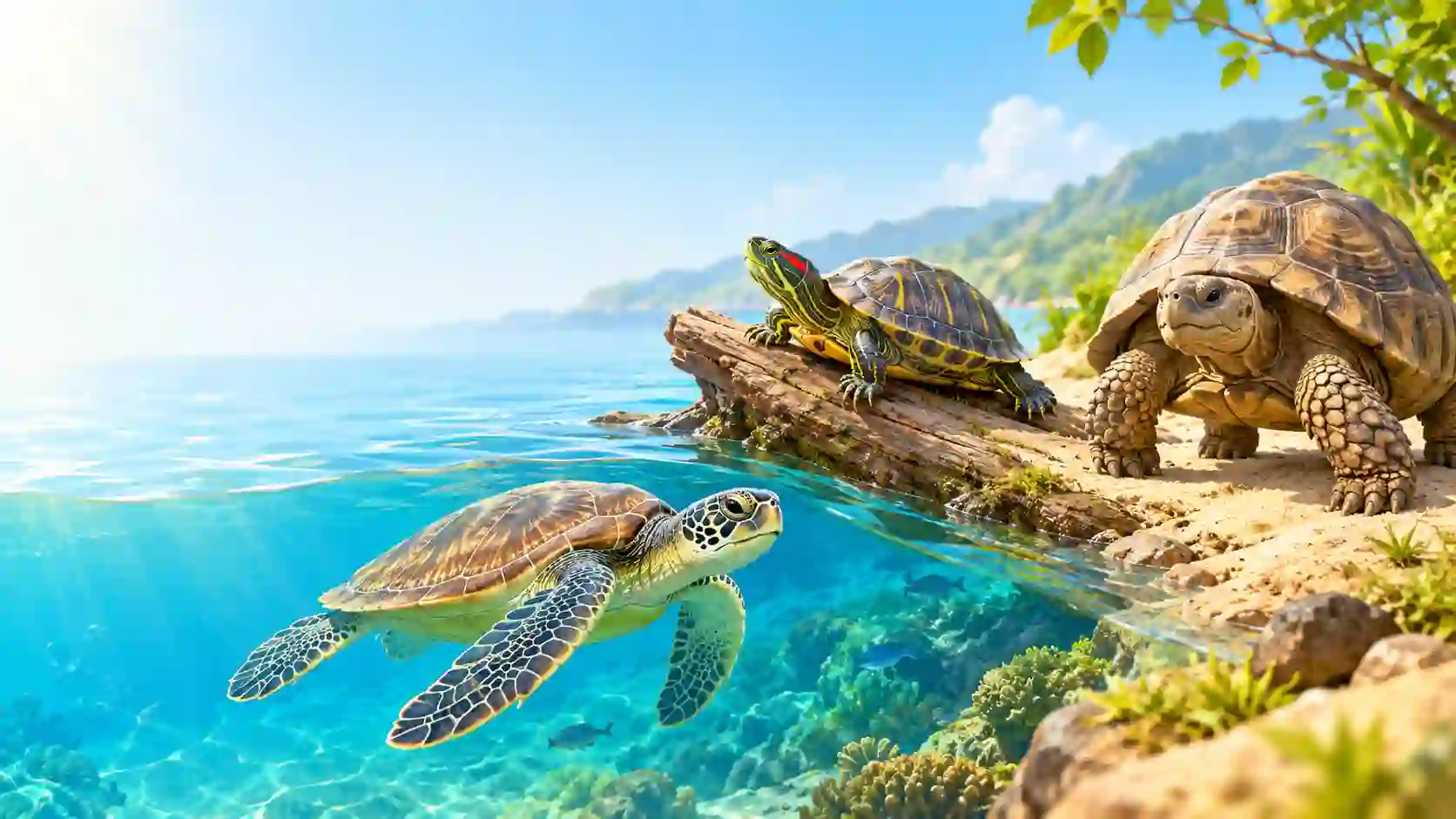
Picture this. You are writing a school report about animals, and you have typed the word turtle five times in one paragraph. It sounds dull, and you know it. So you start looking for another word for turtle. That is where synonyms for turtle come in. A synonym is a word with the same or a very close meaning. Some words are exact matches. Others name a specific kind, like a sea turtle or a snapper. This guide shares 30 synonyms for turtle, with simple meanings and short examples. Students, bloggers, writers, and English learners can all use them. We focus on the animal here, not the clothing item or the verb. Pick the word that fits your sentence best.
Tortoise
Type: Near synonym
Meaning: A tortoise is a shelled reptile that lives on land and moves slowly.
Examples:
- The tortoise munched on lettuce in the backyard.
- My grandfather kept a tortoise that lived for over fifty years.
Terrapin
Type: Near synonym
Meaning: A terrapin is a small turtle that lives in fresh or slightly salty water.
Examples:
- A terrapin sunned itself on a log near the marsh.
- The zoo has a new terrapin exhibit by the entrance.
Chelonian
Meaning: A chelonian is any reptile in the group that includes turtles, tortoises, and terrapins.
Examples:
- The biology teacher asked us to name one chelonian found in Asia.
- Every chelonian has a bony shell that protects its body.
Testudine
Type: Near synonym
Meaning: A testudine is a formal, scientific word for a turtle or tortoise.
Examples:
- The museum label described the fossil as an ancient testudine.
- She used the word testudine in her science paper.
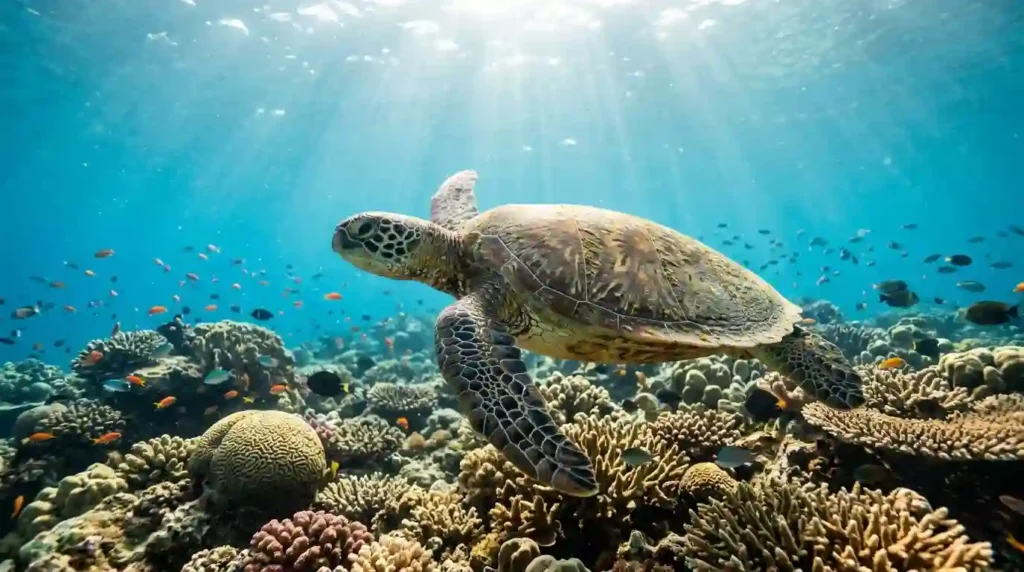
Sea turtle
Type: Context specific alternative
Meaning: A sea turtle is a turtle that spends most of its life in the ocean.
Examples:
- We saw a sea turtle glide past our boat on the last day of the trip.
- Volunteers guard the beach so each sea turtle nest stays safe.
Marine turtle
Type: Context specific alternative
Meaning: A marine turtle is another name for a sea turtle, often used in science and conservation writing.
Examples:
- The report explains how plastic bags harm every marine turtle in the bay.
- Researchers tagged a marine turtle to track its long swim.
Freshwater turtle
Type: Context specific alternative
Meaning: A freshwater turtle is a turtle that lives in rivers, lakes, or ponds instead of the sea.
Examples:
- A freshwater turtle crawled up the muddy bank after the rain.
- Our class built a small tank for a freshwater turtle.
Pond turtle
Type: Context specific alternative
Meaning: A pond turtle is a turtle that lives mostly in still, shallow water.
Examples:
- The park sign warns visitors not to feed the pond turtle.
- A pond turtle paddled slowly beneath the lily pads.
River turtle
Type: Context specific alternative
Meaning: A river turtle is a turtle that lives in flowing rivers and streams.
Examples:
- The guide pointed out a river turtle resting on a rock.
- Farmers along the bank often spot a river turtle at dawn.
Land turtle
Type: Context specific alternative
Meaning: A land turtle is a casual name for a turtle or tortoise that lives mostly on dry ground.
Examples:
- My cousin found a land turtle crossing the gravel road.
- The children watched the land turtle hide inside its shell.
Snapping turtle
Type: Context specific alternative
Meaning: A snapping turtle is a large freshwater turtle with a strong bite and a rough shell.
Examples:
- Stay back from the snapping turtle if you see one near the dock.
- A snapping turtle can hide almost completely in muddy water.
Snapper
Type: Context specific alternative
Meaning: A snapper is a short, informal name for a snapping turtle.
Examples:
- The fisherman said a huge snapper stole his bait.
- Dad lifted the snapper off the road with a shovel.
Loggerhead
Type: Context specific alternative
Meaning: A loggerhead is a large sea turtle with a wide head and strong jaws.
Examples:
- A loggerhead laid her eggs on the beach at midnight.
- The aquarium is caring for an injured loggerhead.
Green turtle
Type: Context specific alternative
Meaning: A green turtle is a large sea turtle that mostly eats plants once it is grown.
Examples:
- A green turtle grazed on seagrass just below the surface.
- Divers often see a green turtle near the coral reef.
Leatherback
Type: Context specific alternative
Meaning: A leatherback is the largest sea turtle and has a soft, leathery shell instead of a hard one.
Examples:
- A leatherback can dive far deeper than most other sea animals.
- The documentary followed a leatherback across the open ocean.
Hawksbill
Type: Context specific alternative
Meaning: A hawksbill is a sea turtle with a narrow, pointed beak and a patterned shell.
Examples:
- The hawksbill uses its sharp beak to find food in coral cracks.
- Posters at the station showed a hawksbill with a bright amber shell.
Olive ridley
Type: Context specific alternative
Meaning: An olive ridley is a small sea turtle with an olive colored shell, known for nesting in huge groups.
Examples:
- Thousands of olive ridley turtles came ashore during the night.
- An olive ridley is smaller than most other sea turtles.
Flatback
Type: Context specific alternative
Meaning: A flatback is a sea turtle with a smooth, flat shell that lives near northern Australia.
Examples:
- A flatback rarely leaves the shallow waters near the coast.
- The ranger showed us tracks left by a flatback on the sand.
Softshell
Type: Context specific alternative
Meaning: A softshell is a freshwater turtle with a flat, flexible shell and a long neck.
Examples:
- A softshell buried itself in the sand at the bottom of the creek.
- The boy was surprised by how flat the softshell looked.
Box turtle
Type: Context specific alternative
Meaning: A box turtle is a small land turtle that can close its shell tightly like a box.
Examples:
- A box turtle pulled on its legs when the dog came close.
- We found a box turtle under the bushes after the storm.
Painted turtle
Type: Context specific alternative
Meaning: A painted turtle is a small freshwater turtle with red and yellow markings.
Examples:
- Three painted turtles were stacked on one log in the sun.
- The bright stripes on the painted turtle caught her eye.
Slider
Type: Context specific alternative
Meaning: A slider is a common freshwater turtle that slides off rocks and logs into the water.
Examples:
- The pet store sold a baby slider with a tiny tank.
- A slider splashed into the pond as we walked past.
Cooter
Type: Context specific alternative
Meaning: A cooter is a large freshwater turtle found mainly in the southern United States.
Examples:
- A cooter drifted lazily down the slow river.
- Locals in Florida know the scooter by its dark, ridged shell.
Musk turtle
Type: Context specific alternative
Meaning: A musk turtle is a small freshwater turtle that gives off a strong smell when it feels threatened.
Examples:
- The musk turtle stayed close to the muddy bottom of the tank.
- Handle a musk turtle gently so it does not release its odor.
Mud turtle
Type: Context specific alternative
Meaning: A mud turtle is a small turtle that likes shallow, muddy water and slow streams.
Examples:
- A mud turtle dug into the soft bank as the pond dried up.
- The kids caught a mud turtle in a bucket and let it go.
Map turtle
Type: Context specific alternative
Meaning: A map turtle is a freshwater turtle with lines on its shell that look like a map.
Examples:
- A map turtle is a shy swimmer that often slips into the water when it hears footsteps.
- The thin yellow lines on the turtle map looked like tiny roads.
Diamondback terrapin
Type: Context specific alternative
Meaning: A diamondback terrapin is a turtle found in coastal marshes, named for the diamond shaped rings on its shell.
Examples:
- A diamondback terrapin nested in the sand dunes near the bay.
- Our teacher explained why the diamondback terrapin needs protected marshland.
Shelled reptile
Type: Context specific alternative
Meaning: A shelled reptile is a descriptive phrase for a turtle, tortoise, or terrapin.
Examples:
- The riddle described a shelled reptile that carries its home on its back.
- A slow shelled reptile plodded across the trail.
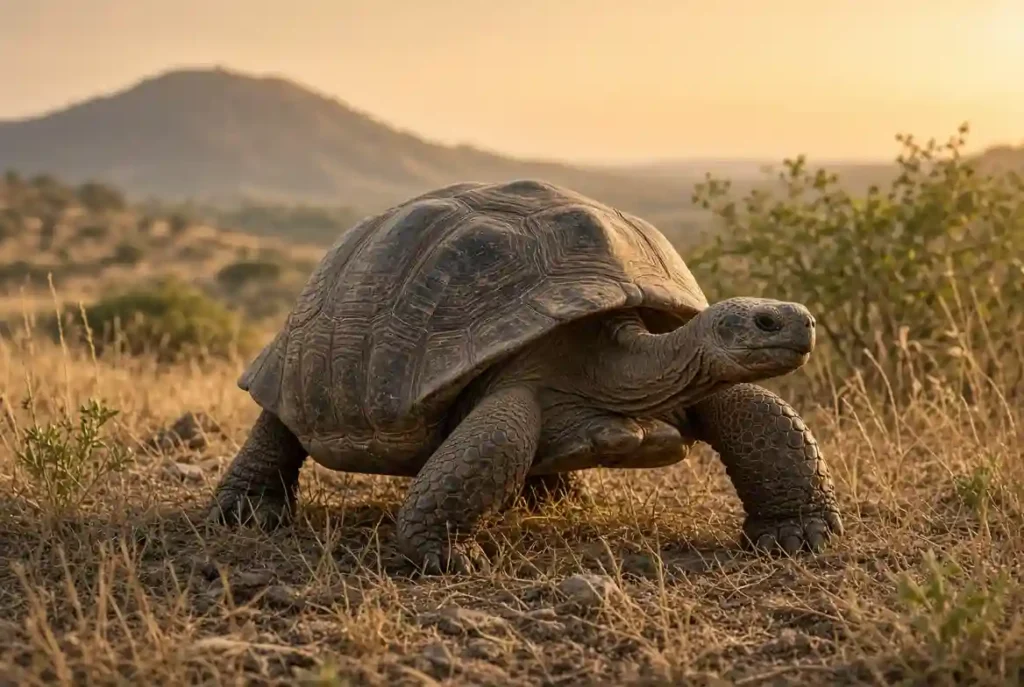
Giant tortoise
Type: Context specific alternative
Meaning: A giant tortoise is a very large land tortoise that can live for well over a hundred years.
Examples:
- A giant tortoise weighed more than three grown men.
- Visitors lined up to take a photo with the giant tortoise.
Wood turtle
Type: Context specific alternative
Meaning: A wood turtle is a medium sized turtle with a rough, carved looking shell that lives near streams and forests.
Examples:
- A wood turtle wandered out of the creek and into the ferns.
- Hikers reported a wood turtle near the old bridge.
Conclusion
Learning synonyms for turtles is a small step that pays off fast. Fresh word choices make your writing clearer, your speaking more precise, and your vocabulary stronger. Try a few of these words in your next email, essay, blog post, or chat with a friend. Just remember to match the word to the animal you mean. Keep practicing, and the right word will come to you more easily each time.

About Matiullah Mughal
Matiullah Mughal is the founder of EliteBloggerHub.com , a digital platform focused on building authority, creating valuable online content, and helping websites establish a stronger presence in search engines. He is also connected with Hexarank SEO Agency, where his work is centered around SEO, content strategy, website growth, and digital marketing.
With a strong interest in search engine optimization and online publishing, Matiullah Mughal focuses on developing websites and digital properties that combine useful content with effective SEO strategies. His approach emphasizes quality, consistency, topical authority, and sustainable organic growth.
Through EliteBloggerHub.com and his connection with Hexarank SEO Agency, Matiullah Mughal aims to contribute practical insights and strategies that help website owners, bloggers, and businesses improve their online visibility and build long-term authority.
Matiullah Mughal — Founder of EliteBloggerHub.com | Connected with Hexarank SEO Agency