
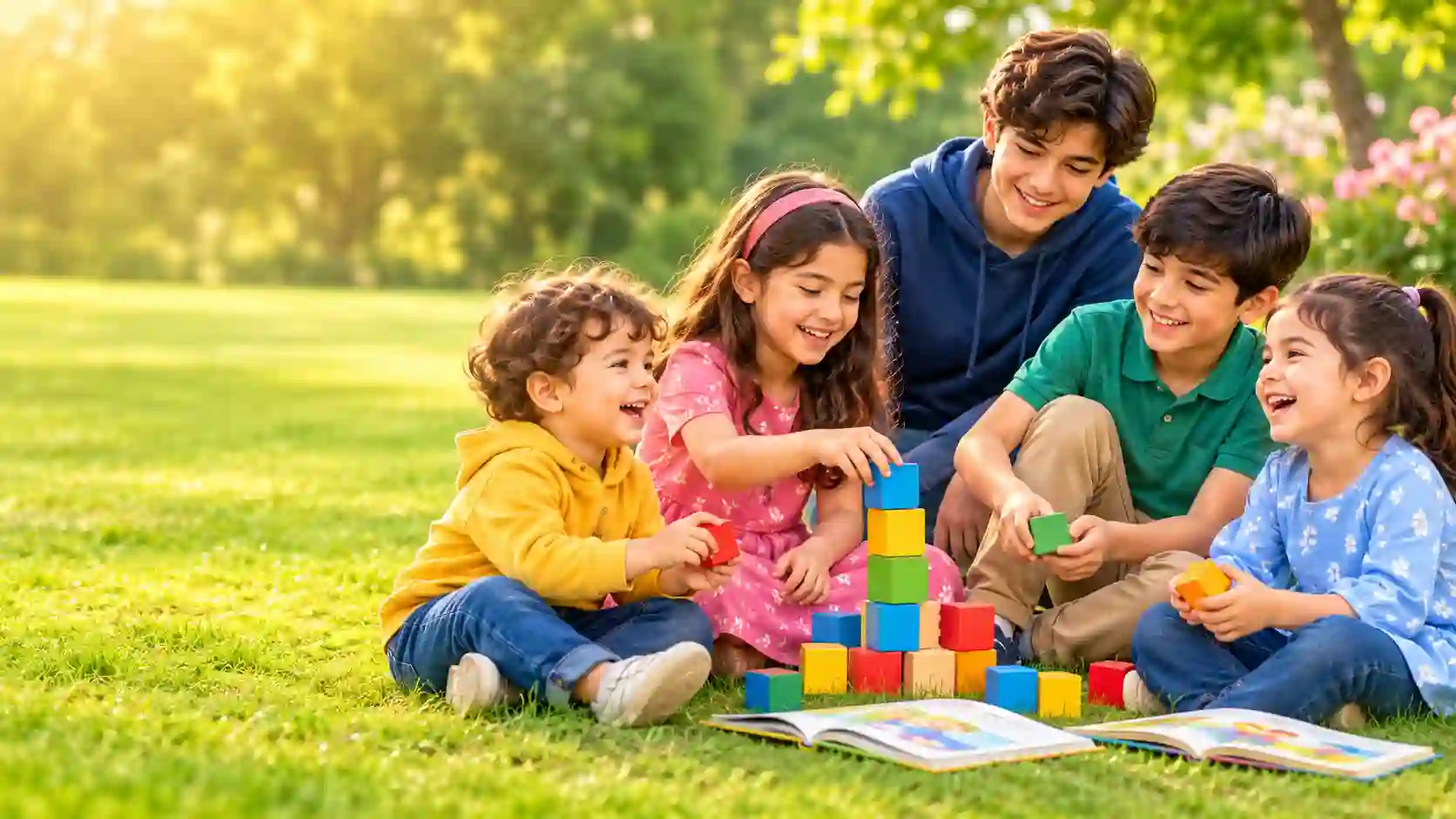
Picture a teacher writing a note home. She has typed “children” four times in two lines. It sounds flat. Then she swaps one word for “youngsters,” and the note feels warmer. That small change is why people search for synonyms for children. The word children means young people who are not yet adults. It also means a person’s sons and daughters. Knowing another word for children helps you pick the right tone. Students use these words in essays. Bloggers and content writers use them to avoid repeating themselves. English learners use them to sound more natural. In this guide, you will find 30 synonyms for children, each with a simple meaning and two real examples. Let’s get started.
Kids
Meaning:
The most common casual word, and the first one most people reach for when they want synonyms for children.
Examples:
- The kids built a fort out of couch cushions.
- Our neighbors have three kids in elementary school.
Type: Exact synonym (informal)
Youngsters
Meaning:
Young people, said in a warm or slightly old fashioned way.
Examples:
- The library runs a reading club for youngsters on Saturdays.
- A few youngsters were playing cricket near the park gate.
Little Ones
Meaning:
Very young children, said with affection.
Examples:
- Please keep an eye on the little ones near the pool.
- She packed snacks for the little ones before the road trip.
Type: Near synonym (usually children under six)
Young Ones
Meaning:
Young children, or the babies of animals.
Examples:
- The teacher sang a song to calm the young ones.
- The ducks led their young ones across the road.
Type: Near synonym
Kiddos
Meaning:
A friendly, casual word for kids, often used by adults.
Examples:
- Okay, kiddos, time to put on your shoes.
- My sister is taking her kiddos to the zoo.
Type: Near synonym (very informal)
Kiddies
Meaning:
A playful word often seen on signs, menus, and ads.
Examples:
- The restaurant has a kiddies menu with small portions.
- The kiddies rides are on the left side of the fair.
Type: Context specific alternative
Tots
Meaning:
Very small children, usually under the age of five.
Examples:
- The daycare has a quiet nap room for tots.
- A group of tots splashed in the shallow water.
Type: Near synonym
Toddlers
Meaning:
Children of about one to three years old who are learning to walk and talk.

Examples:
- The toddlers stacked blocks and then knocked them down.
- Toddlers often say “no” to almost everything.
Type: Context specific alternative
Infants
Meaning:
Babies in their first year or so of life.
Examples:
- Infants need many hours of sleep each day.
- The airline lets infants fly on a parent’s lap.
Type: Context specific alternative
Babies
Meaning:
Very young children who cannot yet walk or talk.
Examples:
- The new parents joined a music class for babies.
- The nurse carried two babies down the hall.
Type: Context specific alternative
Preschoolers
Meaning:
Children of about three to five who are not in school yet.
Examples:
- The preschoolers painted handprints on a big sheet of paper.
- Preschoolers love hearing the same story again and again.
Type: Context specific alternative
Schoolchildren
Meaning:
Children who go to school.

Examples:
- Schoolchildren lined up for the morning assembly.
- The bus stops here to pick up schoolchildren at 7 a.m.
Type: Context specific alternative
Tweens
Meaning:
Kids of about ten to twelve, between early childhood and the teen years.
Examples:
- Many tweens ask for their own phone before they turn thirteen.
- The store has a section for tweens with bright backpacks.
Type: Context specific alternative (informal)
Adolescents
Meaning:
Young people who are growing from childhood into adulthood.
Examples:
- Adolescents need extra sleep to stay focused in class.
- The study followed adolescents for five years.
Type: Context specific alternative (formal)
Teenagers
Meaning:
Young people between the ages of thirteen and nineteen.
Examples:
- The teenagers formed a band in the garage.
- Teenagers often spend hours texting their friends.
Type: Near synonym
Youths
Meaning:
Young people, especially teenagers and young adults.
Examples:
- Local youths cleaned the beach on Sunday.
- The club offers free coaching to youths in the area.
Type: Near synonym
Young People
Meaning:
A neutral, general phrase for children, teens, and sometimes young adults.
Examples:
- Young people today learn to code at an early age.
- The town hall held a meeting for young people.
Type: Near synonym
Juveniles
Meaning:
A legal or scientific word for young people or young animals.
Examples:
- Juveniles are usually tried in a separate court system.
- Scientists tagged the juveniles to track how fast they grow.
Type: Context specific alternative
Minors
Meaning:
People who are under the legal age of adulthood.
Examples:
- Minors need a parent’s signature to join the school trip.
- The shop does not sell energy drinks to minors.
Type: Context specific alternative (legal)
Boys and Girls
Meaning:
A friendly phrase used to speak to a group of kids.
Examples:
- Good morning, boys and girls, please take your seats.
- The coach welcomed the boys and girls to the first practice.
Type: Near synonym
Offspring
Meaning:
A person’s or animal’s children, with the focus on the parent connection.
Examples:
- The couple’s offspring all became teachers.
- The farmer sold the offspring of his best cow.
Type: Near synonym
Sons and Daughters
Meaning:
The children of a parent, used when you want to talk about family.
Examples:
- She raised her sons and daughters on her own.
- He wrote a long letter to his sons and daughters.
Type: Near synonym
Progeny
Meaning:
A formal and fairly rare word for a person’s or animal’s children.
Examples:
- The family business passed to the founder’s progeny.
- Lions guard their progeny fiercely.
Type: Context specific alternative (formal)
Descendants
Meaning:
People who come from a certain ancestor, including children, grandchildren, and later generations.
Examples:
- Descendants of the village founders still live in the old houses.
- The museum invited the explorer’s descendants to the opening.
Type: Context specific alternative (it reaches beyond one generation)
Brood
Meaning:
A group of children in one family, or a group of young birds hatched together.
Examples:
- She walked her brood to the bus stop every morning.
- The hen kept her brood warm under her wings.
Type: Context specific alternative (informal)
Dependents
Meaning:
Children or other people who rely on an adult for financial support.
Examples:
- You can list your dependents on the tax form.
- The company’s health plan covers workers and their dependents.
Type: Context specific alternative
Bairns
Meaning:
A Scottish and northern English word for children.
Examples:
- The bairns were singing in the kitchen.
- Mind the bairns while I get the car.
Type: Context specific alternative (regional)
Nippers
Meaning:
A British and Australian informal word for small children.
Examples:
- The nippers raced down the beach with their buckets.
- Her nippers are always up before sunrise.
Type: Context specific alternative (informal)
Rugrats
Meaning:
A humorous slang word for small, energetic children.
Examples:
- The rugrats took over the living room with their toy cars.
- He babysits his cousin’s rugrats every weekend.
Type: Context specific alternative (slang)
Munchkins
Meaning:
An affectionate, playful word for small children.
Examples:
- Grandma baked cookies for the munchkins.
- The munchkins wore tiny raincoats to jump in puddles.
Type: Near synonym (informal)
Conclusion
Learning synonyms for children gives you more ways to say what you mean. Your writing sounds fresher, your blog posts read better, and your speech feels more natural. Each word in this list carries its own tone, from playful to formal to legal. Try a few in your next email, essay, blog post, school assignment, or chat with a friend. Check the meaning first, then use the word in a sentence of your own. A bigger vocabulary grows one word at a time, so start today.

About Matiullah Mughal
Matiullah Mughal is a content writer and the founder of EliteBloggerHub. He focuses on English vocabulary, synonyms, word meanings, and practical language learning. His goal is to help students, writers, bloggers, and everyday English users find the right words for every situation.
Through clear explanations, carefully selected word alternatives, and practical example sentences, Matiullah aims to make English vocabulary easier to understand and use with confidence.